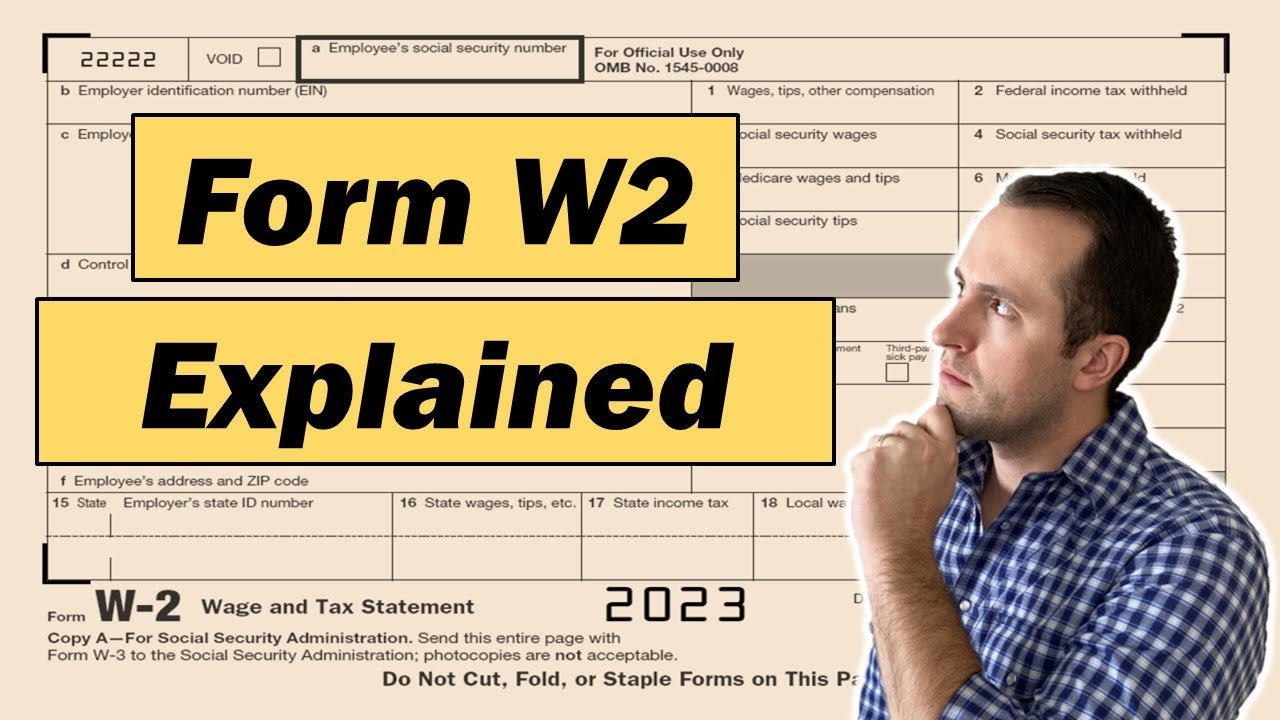
If you’ve worked as an employee during the year, you’ve likely received a W-2 form from your employer.
This document is one of the most important tax forms used during tax season because it summarizes your earnings and the taxes withheld from your paycheck throughout the year.
For many employees, the W-2 serves as the primary document needed to prepare an income tax return.
It provides essential information that helps determine your taxable income, calculate taxes owed, and identify whether you’re eligible for a refund or need to make an additional payment.
Understanding what information appears on a W-2 form and how it is used can make filing your taxes much easier and reduce the likelihood of mistakes.
This guide explains what a W-2 form is, what information it contains, how employers use it, and how employees use it when preparing a tax return.
What Is a W-2 Form?
A W-2 form is a wage and tax statement that employers provide to employees after the end of a tax year.
The form summarizes important payroll information, including:
- Total wages earned.
- Federal income tax withheld.
- State income tax withheld where applicable.
- Social Security wages.
- Medicare wages.
- Other payroll-related information required under tax laws.
Employees use the information on the W-2 when preparing their income tax returns.
Who Receives a W-2 Form?
Generally, employees who earn wages from an employer receive a W-2 form.
This typically includes individuals working full-time or part-time as employees.
A W-2 is usually issued to people whose employer withholds applicable payroll taxes from their paychecks.
Independent contractors generally receive different tax reporting forms rather than a W-2 because their tax obligations are handled differently.
Why the W-2 Form Is Important
The W-2 provides a complete summary of your employment income for the tax year.
Without it, accurately preparing a tax return becomes much more difficult.
The information on the form helps determine:
- Total taxable wages.
- Taxes already withheld.
- Eligibility for refunds.
- Additional taxes that may be owed.
- Certain income-related tax calculations.
Because the information is reported by your employer, accuracy is essential.
When Do Employers Provide W-2 Forms?
Employers generally provide W-2 forms after the end of each tax year according to applicable filing deadlines.
Employees may receive the form:
- By mail.
- Electronically through payroll systems.
- Through secure employee portals if electronic delivery has been authorized.
It’s a good idea to review the form as soon as you receive it.
Information Included on a W-2 Form
A W-2 contains several categories of payroll information.
Common items include:
| Information | Purpose |
|---|---|
| Employee wages | Reports annual earnings |
| Federal income tax withheld | Shows taxes already paid through payroll withholding |
| Social Security wages | Reports earnings subject to Social Security tax |
| Social Security tax withheld | Shows payroll taxes withheld |
| Medicare wages | Reports earnings subject to Medicare tax |
| Medicare tax withheld | Shows Medicare taxes paid |
| State wages where applicable | Used for state tax reporting |
| State tax withheld where applicable | Reports state payroll withholding |
Each section serves a specific purpose during tax preparation.
Understanding Employee Information
The W-2 includes identifying information for both the employee and employer.
This may include:
- Employee name.
- Address.
- Employer name.
- Employer address.
- Employer identification number.
- Employee identification information as required by tax laws.
Review this information carefully to ensure it is accurate.
Understanding Wage Information
One of the most important sections reports your taxable wages for the year.
This amount may differ from your total salary depending on various payroll adjustments, pre-tax deductions, or employer-sponsored benefit programs.
Understanding this distinction helps explain why the wage amount on your W-2 may not exactly match your annual salary.
Federal Income Tax Withholding
Throughout the year, employers generally withhold federal income taxes from employee paychecks.
The W-2 reports the total amount withheld during the tax year.
This information is used when preparing your tax return to compare:
- Taxes already paid through withholding.
- Total tax liability for the year.
Depending on the calculation, you may qualify for a refund or owe additional tax.
Social Security and Medicare Information
The W-2 also reports wages and taxes related to Social Security and Medicare.
These payroll taxes help fund government programs established under applicable law.
The form reports both:
- Wages subject to these payroll taxes.
- Amounts withheld during the year.
These sections are separate from federal income tax reporting.
State and Local Tax Information
If your state or locality imposes income taxes, the W-2 may also include information related to:
- State wages.
- State tax withheld.
- Local wages where applicable.
- Local taxes withheld.
Not every taxpayer will have state or local tax information because tax laws vary by location.
Review Your W-2 Carefully
Before preparing your tax return, review your W-2 for accuracy.
Check:
- Name spelling.
- Address.
- Wage information.
- Tax withholding amounts.
- Employer information.
If you notice an error, contact your employer promptly.
Correcting mistakes before filing helps prevent unnecessary delays.
How the W-2 Helps You File Taxes
When preparing your income tax return, the information from your W-2 is transferred to the appropriate sections of your tax forms or tax preparation software.
The reported information helps calculate:
- Gross income.
- Taxable income.
- Taxes withheld.
- Refund eligibility.
- Remaining tax liability if applicable.
Because the W-2 contains verified payroll information, it serves as one of the primary documents used during tax preparation.
What Happens if You Have Multiple W-2 Forms?
Some individuals work for more than one employer during the year.
In that situation, each employer generally issues a separate W-2.
When filing taxes, information from every W-2 should generally be included to ensure all employment income is reported accurately.
Missing a W-2 could result in reporting incomplete income.
Keep Your W-2 for Your Records
Even after filing your tax return, it’s important to keep your W-2 with your financial records.
You may need it later for:
- Income verification.
- Loan applications.
- Financial aid.
- Tax questions.
- Future recordkeeping.
Maintaining organized tax records can make future financial tasks much easier.
Steps to Use Your W-2 When Filing Taxes
Once you receive your W-2 form, the next step is using the information to prepare your tax return.
The process generally includes:
- Reviewing the W-2 for accuracy.
- Gathering any additional tax documents.
- Entering wage and withholding information into your tax return or tax software.
- Reviewing all information before submitting your return.
- Keeping a copy of the completed return and your W-2 for future reference.
Taking your time during this process helps reduce the likelihood of filing errors.
Gather Other Tax Documents
For many people, the W-2 is only one part of their tax records.
Depending on your financial situation, you may also receive documents related to:
- Bank interest.
- Investment income.
- Retirement distributions.
- Health savings accounts.
- Education expenses.
- Mortgage interest.
- Charitable contributions.
- Self-employment income if applicable.
Having all necessary documents available before filing helps ensure a complete and accurate tax return.
Filing Electronically or on Paper
Tax returns may generally be filed electronically or by paper, depending on the filing method you choose.
Electronic filing is popular because it often provides:
- Faster processing.
- Built-in error checking.
- Easier record management.
- Electronic confirmation of submission.
Paper filing remains an option for eligible taxpayers who prefer preparing and mailing physical tax forms.
The appropriate method depends on your individual circumstances and preferences.
What if You Don’t Receive Your W-2?
If you expected a W-2 but haven’t received it, don’t ignore the situation.
Consider these steps:
- Confirm that your mailing address is correct.
- Check your employer’s online payroll portal.
- Contact your employer’s payroll or human resources department.
- Verify whether the form has already been issued.
Resolving the issue before filing helps reduce delays and improves the accuracy of your tax return.
What if Your W-2 Contains an Error?
Mistakes occasionally happen.
Examples may include:
- Incorrect name.
- Wrong address.
- Incorrect wage amount.
- Incorrect tax withholding.
- Incorrect employer information.
If you notice an error, contact your employer as soon as possible.
Do not alter the form yourself.
Employers can generally issue corrected documentation when necessary.
Understanding Tax Withholding
The tax withheld throughout the year represents money already paid toward your estimated income tax obligation.
When preparing your tax return, your total tax liability is compared with the amount already withheld.
Depending on the calculation:
- You may receive a tax refund.
- You may owe additional taxes.
- Your payments and tax liability may be nearly equal.
The W-2 provides the withholding information needed for this calculation.
Why Accurate W-2 Information Matters
Incorrect information on a tax return may lead to:
- Processing delays.
- Additional correspondence.
- Amended tax returns.
- Refund delays.
- Possible penalties in certain situations.
Reviewing your W-2 carefully before filing helps reduce these risks.
Keep Copies of Your Tax Records
After filing your return, organize your tax documents in a safe location.
Helpful records include:
- W-2 forms.
- Filed tax returns.
- Supporting receipts.
- Income documents.
- Tax payment confirmations.
- Employer correspondence if corrections were issued.
Keeping organized records can simplify future tax preparation and provide documentation if questions arise later.
W-2 Forms and Tax Refunds
Many taxpayers wonder whether receiving a W-2 guarantees a tax refund.
The answer is no.
A refund depends on several factors, including:
- Total tax liability.
- Taxes withheld during the year.
- Filing status.
- Available deductions.
- Eligible tax credits.
- Other income reported on the tax return.
The W-2 supplies important information used in these calculations, but it does not determine the outcome by itself.
Common Mistakes to Avoid
Many filing errors are preventable with careful preparation.
Common mistakes include:
- Entering incorrect wage information.
- Forgetting to include one of multiple W-2 forms.
- Filing before receiving all tax documents.
- Ignoring errors on the W-2.
- Using outdated personal information.
- Misreporting withholding amounts.
- Failing to keep copies of filed documents.
Reviewing every entry before submitting your return helps improve accuracy.
Advantages of Understanding Your W-2
Learning How to Read your W-2 offers several benefits.
These include:
- Better understanding of your annual earnings.
- Improved tax preparation.
- Greater confidence during filing season.
- Easier communication with tax professionals.
- Better financial recordkeeping.
- Reduced likelihood of filing errors.
- Stronger understanding of payroll taxes.
Financial literacy makes managing taxes less stressful year after year.
Frequently Asked Questions
Is a W-2 the same as a paycheck?
No.
A paycheck reports earnings for a specific pay period, while a W-2 summarizes your annual wages and tax withholding for the entire tax year.
Can I file taxes without my W-2?
Generally, your W-2 contains important information needed to prepare an accurate tax return.
If you have not received it, contact your employer before filing.
Why does my W-2 wage amount differ from my annual salary?
The wage amount reported on your W-2 may differ because certain pre-tax deductions, employee benefits, or other payroll adjustments can affect taxable wages.
What should I do if I worked for more than one employer?
Each employer generally provides its own W-2.
When preparing your tax return, information from every applicable W-2 should typically be included.
Should I keep my W-2 after filing taxes?
Yes.
Keeping copies of your W-2 and other tax documents supports future recordkeeping, income verification, and any questions that may arise regarding previously filed tax returns.
Practical Tips for Tax Season
Preparing early often makes tax filing easier.
Helpful habits include:
- Organize tax documents as they arrive.
- Review every W-2 carefully.
- Verify personal information.
- Save electronic and printed copies.
- Gather all supporting tax records before filing.
- Double-check every number entered into your return.
- File before applicable deadlines.
- Seek professional assistance if your tax situation becomes more complex.
Good organization reduces stress and improves filing accuracy.
Final Thoughts
A W-2 form is one of the most important tax documents employees receive each year because it summarizes annual wages, tax withholding, and other payroll information needed to prepare an accurate tax return.
Understanding how to read your W-2 helps you verify your income, confirm taxes already paid, and complete your tax filing with greater confidence.
Reviewing the form carefully, correcting any errors promptly, and maintaining organized records are essential steps in the tax filing process.
If you worked for multiple employers, remember that each W-2 should generally be included when preparing your return to ensure complete income reporting.
By understanding the purpose of the W-2 and how it fits into the overall tax filing process, you can reduce errors, simplify tax preparation, and build stronger financial knowledge that will continue to benefit you during future tax seasons.